Good Help is Hard to Find: Considerations for Choosing and Implementing Effective Help Systems

Pure Visibility, 201 S. Main Street, Ann Arbor, MI 48104

Wednesday, April 25th, 6pm

Usually the last system to be implemented, but many times the most important lifeline for the customer, is the software help system.

Ideally, your software system is perfectly understandable and problem-free from lots of user testing and software iteration, but that’s usually not the case. Your customers may get frustrated and leave the site, and may even complain about their crappy experience to others. Providing your customers with effective Help is the last chance you have to turn a frustrating experience into a meaningful one.

As a User Experience professional, what Help strategies should you consider? What content do you need? How do you find an appropriate Help Authoring Tool for your software product? There are many vendor systems out there that offer many features. What do you really need? Attendees will learn about help system considerations such as: how to connect the help system to your software, content management features, content strategy, localization, statistics, and more, which will assist you in finding a solution that helps your frustrated customers become happy customers.

About Our Speaker
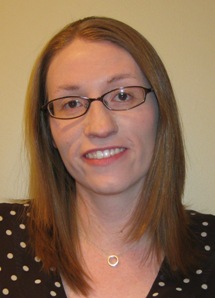
Elaine Meyer

Elaine Meyer is a User Experience Specialist at ProQuest, an electronic and microfilm publisher in Ann Arbor, Michigan. With over 4 years experience managing, implementing, and producing content for user assistance systems, she has a good grasp on where and when users might need a little extra help. Elaine has implemented the ProQuest platform software user assistance (Help) system from it’s infancy, customized it to suit the platform, populated it with content, and localized that content into 18 other languages.

Before her role at ProQuest, Elaine was an application engineer for a manufacturing company. In her role, she made it her mission to provide pertinent information for her customers 24 hours a day through implementing and populating content for an online FAQ user assistance system.

Elaine earned her MSI degree in human-computer interaction (HCI) and Library and Information Services (LIS) from the University of Michigan School of Information in 2009, and is an avid cyclist, dog walker and veggie enthusiast.

When

Wednesday, April 25th
6:00 PM — Networking
6:45 PM — Announcements
7:00 PM — Speaker
8:30 PM — Wrap up and more networking

Location

Pure Visibility, Ann Arbor

Google Map

Parking is available nearby, including the Fourth & Washington parking structure.

Cost

Current students $5
Usability Professionals’ Association members $10
All others $20

Register

Register online at Guestlist so we know who’s coming and how to plan for refreshments. We’ll also take payment (cash or check) at the door. Questions? Email events {at} michiganupa dot org.


Finding the Right Things to Measure with Web Analytics

MSU Communication Arts and Sciences Bldg. Rm 151, East Lansing

Thursday, February 23rd, 6pm

As a user experience professional, how can you use web analytics data to measure how well a site works for users and show the effectiveness of your work? This presentation describes a method for cutting through the complexity of web analytics by finding a way to link business goals to users’ tasks and then to specific, measurable behavior in analytics. This will make web analytics more useful to you and help you communicate more effectively with business stakeholders.

There are a wide variety of metrics available to you, from pageviews to bounce rate and more, and they are open to interpretation with regard to user motives. That’s where the concept of analytics goals comes into play, by giving you a way to easily measure how many users are performing certain actions.

It is essential to isolate specific actions that users could only have completed intentionally, ones where you can be reasonably sure they are fulfilling their own goals (and the business’ goals). This talk will discuss an approach to eliciting specific actions that are relevant to users and measurable with web analytics, and therefore appropriate to evaluating the usability of a website.

This presentation will be grounded in real-world examples. It is geared toward people familiar with analytics, but it will be understandable for the analytics-curious, with just enough of an introduction to web analytics to provide context.

Attendees at this session will:

  • Understand what can be measured with web analytics and what cannot be measured
  • Choose measurable user behavior that reflects the usability of a
    website as well as business goals

About Our Speaker

Michael Beasley

Michael Beasley is the user experience team lead at Pure Visibility, an Internet marketing firm in Ann Arbor, Michigan, USA. He has built their UX practice and incorporated web analytics heavily into UX activities. Mike earned his MSI degree in human-computer interaction at the University of MIchigan School of Information, has been active in his local chapter of the UPA (even serving as president in recent years), and is the author of a recent article on web analytics for User Experience Magazine.

When

Thursday, February 23rd
6:00 PM — Networking
6:45 PM — Announcements
7:00 PM — Speaker
8:30 PM — Wrap up and more networking

Location

MSU Communication Arts and Sciences Bldg. Rm 151, East Lansing
East Lansing, Michigan 48824

Campus Map
Google Map
Visitor parking is available in the structure just south of the Communication Arts and Sciences building on Red Cedar Rd.

Cost

Current students $5
Usability Professionals’ Association members $8 through Feb 15, $10 after that
All others $15 through Feb 15, $20 after that

Register

Register online at Guestlist so we know who’s coming and how to plan for refreshments. We’ll also take payment (cash or check) at the door. Questions? Email events {at} michiganupa dot org.
Accessibility Summit 2011

Tuesday, September 27, 2011, 9:30am to 5:30pm

University of Michigan Union, Ann Arbor, Michigan

Join us for a full-day online conference with experts on web accessibility, presented by Environments for Humans. Learn strategies for captioning, how different screen readers handle HTML5 and ARIA, integrating accessibility across multiple devices, how people with disabilities access the web and more.

Accessibility Summit

Thanks to the generous support and partnership from the University of Michigan Office of Institutional Equity and an anonymous sponsor, MI UPA will host the Environments for Humans Accessibility Summit at no cost for those who attend at our meeting room location in Ann Arbor.

Speaker Schedule (as of September 4, 2011)

Lunch at 2pm (one hour)

  • 3:00pm – Glenda Sims: Captioning Strategy
  • 4:00pm – Henny Swan: Integrating Accessibility Across Devices
  • 5:00pm – Matt May: Watch Your Language
  • * 6:00pm – Derek Featherstone: Everything I Know about Accessibility I Learned from Star Wars

Location

University of Michigan Union (map)
Pendleton Room
530 S. State Street
Ann Arbor, MI 48109-1308

Cost and Registration

There is no cost to attend the conference at our MI UPA event, but:

  • The conference will be viewed in Ann Arbor, Michigan. If you’re not able to come to Ann Arbor, you will need to purchase your own ticket from Environments for Humans.
  • Pre-registration is required.
  • First-come, first served. There will be no waiting list.
  • Register online via Guestlist

Note: If you want free wifi for the event, you must email secretary {at} michiganupa {dot} org by September 20. (University of Michigan people don’t need to request wifi, as your uniqnames and passwords will allow you access.) Any requests received after September 20 will not be filled.

Additional Information

  • Arrive before 10:00am since the session begins promptly.
  • The online conference will be presented via the Internet via Adobe Connect and will be viewed via a projector.
  • Attendees don’t need to bring their laptops, except for note taking.
  • Free continental breakfast will be served before the conference begins.
  • * Since an evening event is scheduled in the venue, we will need to vacate the room by 5:30pm

While the conference is free, those attending will need to arrange for their own lunch (one hour lunch break). Lunch is available from several restaurants in the Michigan Union as well as local Ann Arbor restaurants within walking distance.

Questions? Email secretary {at} michiganupa {dot} org.

Pattern Enabled Development

Postponed – Date TBD

Mango Languages

In fall 2004, Ford Motor Company chartered a team of Perl/CGI developers to implement a robust 80-table J2EE application with assistance of a single Java consultant.

The lessons learned are emerging as an application development evolution – Pattern Enabled Development – a catalyst for business innovation.

Share in the excitement as Marvin takes us on a multi-year journey across four continents in pursuit of an enabling approach to global application development. And dissect lessons learned for applicability within your sphere of influence!

About Our Speaker

Marvin Toll

Marvin Toll is an IT enthusiast with over two decades as an effective Consultant, Project Manager, Architect, Instructor, Supervisor and Developer. PMP certified for ten years beginning in 1999, he was an early adopter of Agile Practices while managing full life cycle development and COTS implementations. As a Java Architect he has “hands-on” skills in object-oriented design, Java EE application development and COTS product development. Marvin has experience in the automotive, education, financial, government, human resources, legal, and utility sectors.

In his spare time Marvin authored four (4) open source initiatives (beginning with the most current):

  1. SOAj – A “General Store” Approach To Application Development
  2. TestUtil – Automated Method Testing Tool
  3. JSlim – “Service Locator Information Manager”
  4. protodev – Prototyping Tool (deprecated)

During the past couple years Marvin founded both the regional “Agile and Beyond” conference and the “Pattern Enabled Development” movement.

When

Postponed – Date TBD
6:00 PM — Networking
6:45 PM — Announcements
7:00 PM — Speaker
8:30 PM — Wrap up and more networking

Location

Mango Languages – Host and Sponsor
30445 Northwestern Hwy. Suite 300
Farmington Hills, MI 48334

Map

Cost

$5, Current students
$10, Usability Professionals’ Association members
$20, All others

Register

Register online at Guestlist so we know who’s coming and how to plan for refreshments. We’ll also take payment (cash or check) at the door. Questions? Email events {at} miupa dot org.

Recap: Do Better Design Reviews

Attendees at the meetingWhen you solicit feedback on a design, people are often afraid of hurting your feelings and may not give you the feedback you really need. How can you solicit useful feedback in an efficient way?

Davin Granroth from Convenant Eyes led an exciting and informative workshop on design reviews. He kicked off the meeting with a description of the technique, and then demonstrated it briefly with
some members of his team. We then divided into three groups to review three different designs that people had brought to the workshop.

A design review consists of three phases:

  1. The designer explains the design
  2. The designer steps back and leaves the conversation entirely whilethe moderator leads a discussion of what works and what doesn’t work in the design. The designer takes notes.
  3. The designer returns to the conversation to echo back what he or she heard during the design review to make sure it was captured properly.

To learn more, Davin has a longer write-up about his design review model on his blog. You can also hear him discuss this technique on the Design Critique podcast.